wesdotphotography.com
visit us:
  • Home
  • Autos and Vehicles
  • Nature and Animals
    • Animals >
      • Animals
      • Canines
      • Cats
    • Birds >
      • Birds
      • Eagles and Osprey
      • Hummingbirds
      • Owls
      • Tall Birds
    • Equine >
      • Everything Horses
      • Lipizzans
      • Wild Horses
    • Flora
  • Pacific NW
    • Japanese Gardens
    • Mountains
    • Night Skies
    • Ocean
    • Pacific Northwest
    • Portland
    • Waterfalls and Streams
  • People
  • Travels
    • Alaska
    • California
    • Desert Southwest
    • France
    • Northeast
    • Rocky Mountain States
    • Yellowstone and Tetons
  • Unique Art
    • Abstracts
    • Triptychs
  • About Us
    • Blog
    • Forum
    • Contact Us
    • Legal

ABSTRACT LINES

3/28/2026

0 Comments

 
Picture
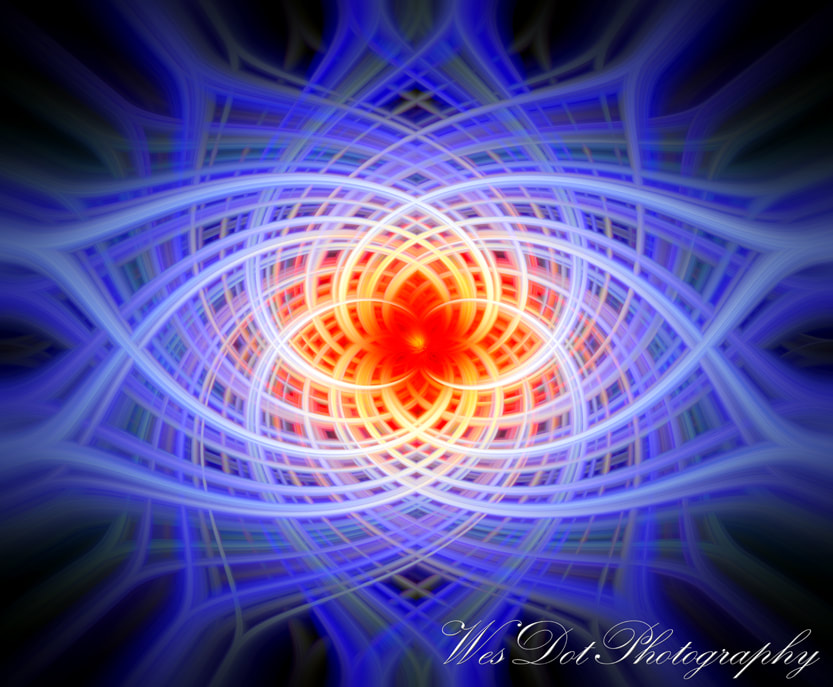
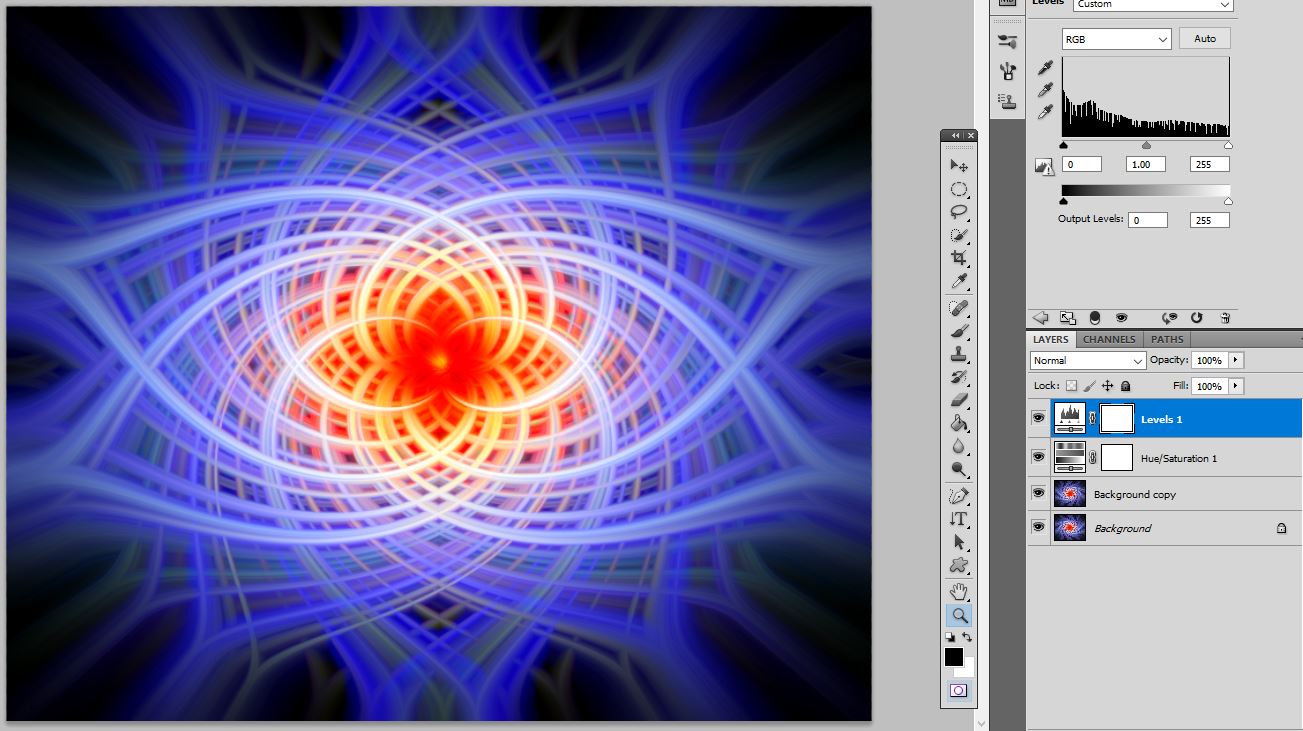
Want to learn how to create something like this from a blank document using Photoshop? It looks like a lot of steps but once you are done you will have a new brush and your options are nearly endless. This is a very simple one color image. Continue on if you feel adventurous.
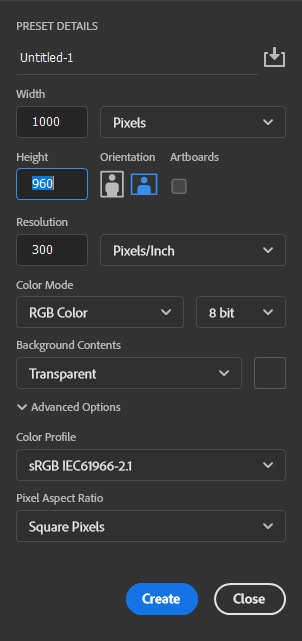
Create a new document. Select File>New File. I am creating a 2500x2500 pixels at 300ppi. Select Create.
Picture
Create a blank layer by selecting the second to last icon at the bottom of the layer palette.
Picture
Select the brush tool from the tool bar. Make sure the foreground color in the color picker is black. To open the brush palette click on the down arrow on the upper left hand corner of screen.
Picture
Select the Pen Tool from the tool bar. Right click on the tool and select the Pen Curvature Tool. Make sure the drop down box shows Path selected.
Picture
Each time you click on a spot it will create an anchor point. The yellow arrows show the anchor points I created.
Picture
Make sure the background color in the Color Picker is black. Right click anywhere along the line and select Stroke Path.
Picture
From the drop down box change the tool from Pencil to Brush. Click OK.
Picture
Right click anywhere along the line and select Delete Path.
Picture
Select Edit then Define Brush Preset.
Picture
Rename Brush Name to Abstract Lines. Click OK.
Picture
Create a new document. Select File>New File. I am creating a 1920x1080 pixels at 300ppi. Select Create.
Picture
Change the brush size.
Picture
From the Adjustment Layer Icon at the bottom of the Layer Palette select Solid Color. This will fill the background layer with whatever color you select. I went with black. Then select OK.
Picture
Add a blank layer by clicking on the 2nd to last icon at the bottom of the layer palette.
Picture
Click on the Brush Settings Box in the upper left hand side of the screen. Set Spacing to 1%
Picture
Select Shape Dynamics and select Fade. Set the steps for angle fade to 500.
Picture
Save as a new Brush Preset. Click on the multi-line area to open the drop down box. Select New Brush Preset.
Picture
Rename this Abstract Lines with Settings and select Capture Brush Size in Preset. Then click OK.
Picture
You can now choose any color by clicking on the color palette and begin trying the new brush.
Picture
The brush will now be available and found at the bottom of your brushes.
Picture
You can change the size of the brush. Also change the color from the color picker. Changing the background color and adding a gradient to that layer will give a completely different image. Try changing how quickly you move the brush and the direction of the movement across the screen. Then you can always change the blend modes of the layers. Along with applying layer styles. The options you have are nearly limitless.

Have Fun!

0 Comments

IMAGE DUPLICATED TO CREATE BORDER

3/24/2026

0 Comments

 
Picture
Picture
ORIGINAL IMAGE
Instructions for a PC. Instructions may vary slightly between Mac and Windows.

After opening your image in Photoshop duplicate the background layer. Right click on background layer>select the Duplicate Layer from drop down box.
Picture
From the Edit tab select Free Transform
Picture
Select and hold the alt-shift on any one of the handles circled in white.
Picture
While still holding the alt-shift keys drag the handle to center to make an equal sized border of your liking. Press enter or select the check mark above the image to apply.
Picture
Select the Background Layer to make it active. Select the Adjustment Layer icon found in the bottom of the Layers palette.
Picture
Select Hue & Saturation from the drop-down box.
Picture
With the Hues/Saturation layer active lower the Saturation & Increase Lightness.
Picture
Select the top layer to make it active. Then at the bottom of the layer palette select the 2nd style icon.
Picture
From the drop-down box select Blending Options.
Picture
Select the Stroke in the drop-down box. All the prior layer styles you have used will automatically show in the settings. I have left the size a little larger so it's easily seen but you can change it to your liking along with the opacity which I left at 100%.
Picture
Select Color. This will open up the Color Picker. There will be an eyedropper. (not showing in this screenshot but it will be there)  This will allow you to  select any color on the image for the stroke by clicking on that spot. When you are happy with the color select OK on the Color Picker.
Picture
You can select any, all or none of these Layer Styles. When you select any and make it active there are many adjustments you can make to each of them. All the adjustments you make will show on the screen so you can unselect or keep to your liking.
I've added a Bevel & Emboss for a point of reference. 
Picture
 When finished select OK.
Remember to Flatten Layers and do a Save As.
Please comment with any questions.  Or to just say you are gaining something from my post and I will continue creating more.

0 Comments

REMOVING THOSE TEDIOUS AREAS QUICK AND EASY

3/14/2026

0 Comments

 
Picture
Picture
Always start with duplicating the layer.

Open Object Selection Tool and switch from Rectangle to Lasso. Using the lasso tool trace around the object you want to remove. It can be used on a variety of things like fences, cyclone fencing, pretty much anything such as this harness.
Draw around the entire subject with the lasso tool you want to remove selecting all of it and staying close to the edges as possible. It will look like you've selected too much but once you let go of the mouse or pen it snaps onto the 'object' like in the screenshot below.
Picture
Select>Modify>Expand and change to approximately 20 pixels and click ok
Picture

Click on Edit>Fill>Content Aware>OK

Picture
And you are ready to do any additional cleanup or editing.

Picture
I hope you have found this helpful.  If so or have questions please comment here or on Facebook.  Thanks for looking and as always love your support!
0 Comments

September 14th, 2025

9/14/2025

0 Comments


My Workflow--Steps from RAW image to finished image.

Picture

Here is the original RAW file before any edits were made and before running through my current favorite denoise program.  Link is below if you want to check it out.

www.dxo.com/dxo-pureraw/

Picture

And here is the finished image.  I won't post every step like cropping or any of the other editing tools everyone is probably already familiar with.  I start all of my steps in Adobe Lightroom Classic.

Picture

Here are my first basic adjustments.

Picture
Next I adjust the colors.  I usually find there is too much blue so I reduce that and increase the orange to enhance the tiger.  Every image will of course be different and it will be a matter of what you find works best for your image.
Picture
I then sharpen the image.  I usually start with the Masking at 100%.  That way I am only sharpening the edges of the pixels and not the whole image which would include any noise.  If the image needs more sharpening I drop the masking like I did for this image.  And one of my last steps also involves sharpening so be very conservative with this step.
Picture
I select the masking option which is found here marked in red.
Picture
Using the brush tool I select the tiger's eyes.  The 'Show Overlay' is helpful to make sure your selection is in the correct area.
Picture
The only thing I'm changing here are the Effects and Detail.
Picture
I then open the Lightroom image in Adobe Photoshop and address any small details like those I circled in red above.  I usually start with just a healing brush and then clean up any edges by erasing the edges on the layer mask. 
If I'm not happy with that I use the clone tool. 
If all else fails I select the area and use the Generative Fill found in the Edit tab.  If you are not familiar with that tool look for my previous blog post about it.
Picture
Here is probably my favorite plugin!  I have many Greater Than Gatsby actions and use them for many steps.  I use most of them but my favorites are Innocence Retouch, Carving Tree and Painterly Portrait.  
If you want to see more of this plugin the link is below.

https://www.greaterthangatsby.com/?srsltid=AfmBOopaf10pb2_GFnZDiQ1fp1Ezgrens2XD3ESH_UWa0b4NE7gka8rh
Picture
There are quite a few different things you can do in Innocence Retouch.  On this image I used the Iris: Darken Rim to enhance the black.
Picture
Still in Innocence Retouch I use the Iris: Soft Sharpen on the eyes.
Picture
Using Photoshop Adjustments I open Vibrance to add even more color to the eyes.  Again this is a preference but on this image I really wanted to make the eyes POP!
Picture
In the Vibrance adjustment layer and with the mask selected drop the Saturation all the way to the left making the image black and white.
Picture
With your mask still selected invert the mask so it is no longer white but now is black.  And your image will be full color again.
Picture
With your brush foreground color white paint over only the eyes.  This will now make only that area black and white.
Picture
Switch the mask being active to the Vibrance symbol.  Then drag the Vibrance and/or Saturation sliders right to increase.
Picture
In the Carving Tree Collection I use the Iris Sparkle action to add a big bang effect to the eyes.  Usually a very slight amount of this is the way to go.  But if you want over the top go extreme.  The amount of bang is controlled by changing the opacity.
Picture
Here is the after effect of brushing the  Iris Sparkle on the tiger's eyes and the percentage of opacity I used.
Picture
And this is probably my favorite plugin of the Greater Than Gatsby collections.
Picture
I used Hide The Highlights to cut down on the highlights.  It will flatten the layers.
Picture
Using a white brush I removed the effects from the eyes as I wanted them bright and removed the edges around the right and bottom portion of the image.
Picture
Still in the Painterly Portrait collection I use Kandiinsky.  This will flatten the layers and give it a softer and more glowing look.  I didn't want this to apply to the eyes or the nose so I painted over them with the black brush.  I also lowered the opacity as at 100% it is too smooth for this image.
Picture
Next I added a Photoshop Levels adjustment to brighten most of the image.
Picture
I still like the old school type of sharpening so after flattening the layers I create a duplicate layer.  Then open up the Photoshop High Pass filter found where else but in the Filter Tab.  It is located by hovering your mouse over 'Other' then clicking on High pass.  Keep the Radius at a level where you are just beginning to see the lines in the gray area.  For this image I used 2.2 Pixels.  Then click OK.
Picture
You can either use the Blend Mode of Overlay (stronger effect) or Soft Light (softer effect).  I used Soft Light on this image.  Plus either Blend Mode you use can be adjusted by moving the Opacity slider to the left.
This is the last step before I flatten the image and then using 'Save As' I create a new file name.

0 Comments

2024 KENYA ITINERARY

7/20/2024

0 Comments

 
Picture
 1) 8/23 Arrive Nairobi

2) 8/24 Nairobi to Amboseli: stay at Elephant Gorge Camp

3) 8/25 Amboseli National Park

4) 8/26 Amboseli National Park to Lake Naivasha

5) 8/27 Lake Naivasha

6) 8/28 Lake naivasha: Masai Mara

7) 8/29 to 8/30 Masai Mara

8) 8/31 Masai Mara to Lake Elementaita Serena Camp

9) 9/1 Soysambu conservancy and Pejeta Conservancy

10) 9/2 Pejeta conservancy to Samburu

11) 9/3 Samburu

12) 9/4 Samburu to Nyeri

13) 9/5 Nyeri to Nairobi 
Highlights of our trips:
  • Elephants and other wild animals that will be walking freely through some of our camps.
  • We will be hopefully photographing elephants as they walk in front of Mt. Kilimanjaro at sunrise. Or whatever other animals that might grace our view.
  • Flamingos on the several lakes we will visit.
  • Fingers crossed that we catch some of the great migration of wildebeast, zebras and other game crossing rivers. It's the right time of the season but being wild animals luck will need to be with us.

  • Visiting a Masai Mara village.
  • Visit Pejeta Conservancy with a large variety of animals but is also one of the few places in the world that you can see the northern white rhino. The conservancy houses four of the seven northern white rhinos living in captivity – they are generally considered extinct in the wild.
  • Visit a Masai market and shopping mall.

0 Comments

KENYA AFRICA TRIP OF A LIFETIME COUNTDOWN

7/19/2024

0 Comments

 
Picture
Thirty two days until I am on my once in a lifetime trips.....Kenya. I will be leaving on August 22, 2024 and returning on September 6, 2024.

So excited to see animals roaming free! Like this cheetah that I photographed at Wildlife Safari in Winston, Oregon. This is one of two siblings celebrating their first birthday. So very rambunctious and still kind of fluffy. Hard getting a decent shot through the cage wires.


Wildlife Safari began breeding cheetahs in 1972 and successfully produced a litter the following year. Since then, 241 cheetahs have been born at the park, making Wildlife Safari the second most successful breeding center on Earth and the top center in the Western Hemisphere.

I will be blogging here as much as time and WiFi allows.  If you would like to follow along on my journey please follow my blog.  Or follow me at www.facebook.com/wesdotphotography or www.instagram.com/wes_dot_photography/

0 Comments

THE MAGIC OF GENERATIVE FILL

2/17/2024

0 Comments


Picture
Picture
Generative fill is a new feature available on Adobe Photoshop. In a nutshell you can select a portion of your image and by using text/prompts you can fill that area with anything you can imagine. The magic of Artificial Intelligence is here to stay whether you love it or hate it. It's far from perfect but you can completely change a background or a small segment.
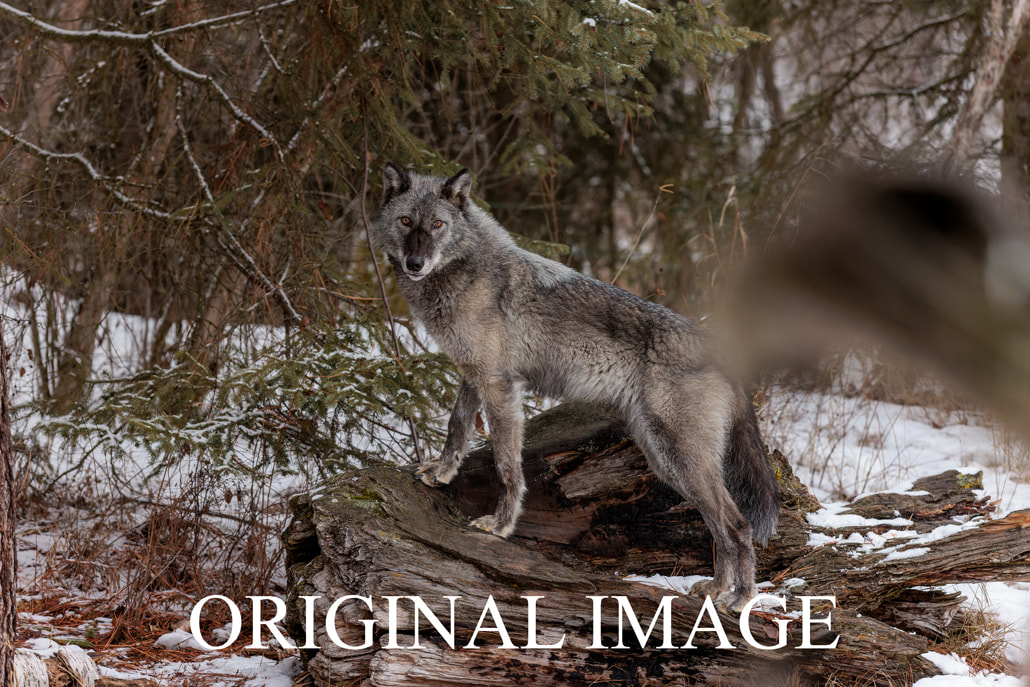
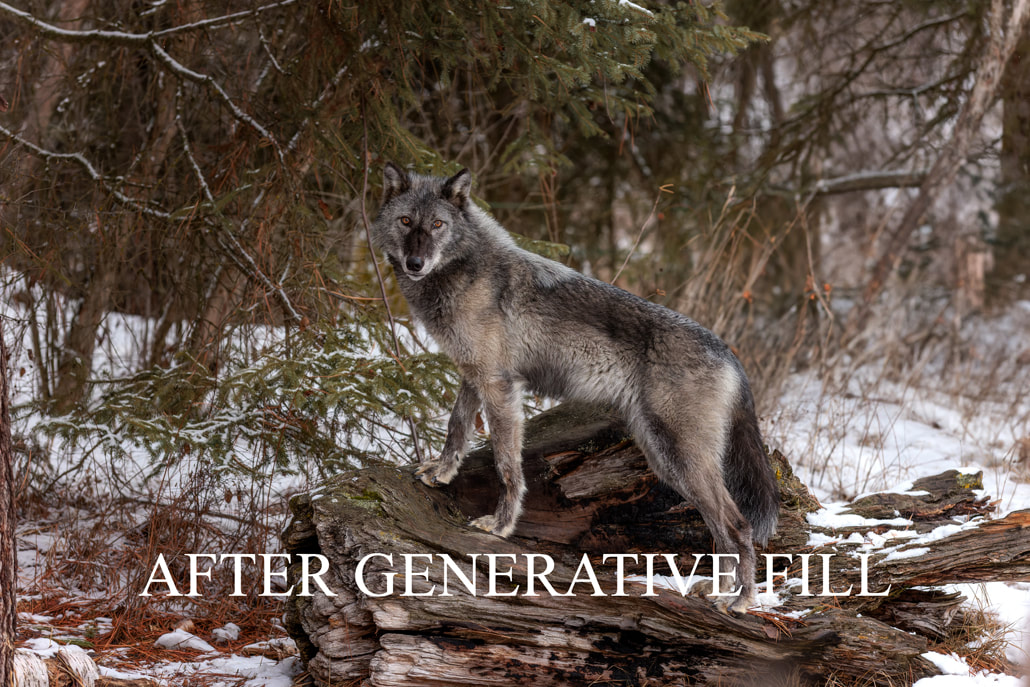
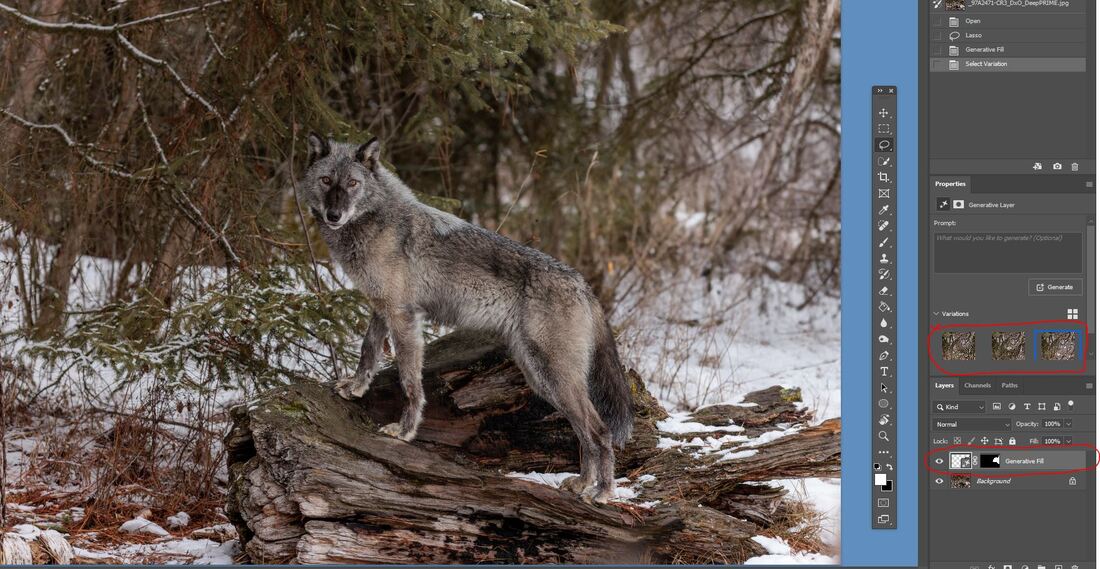
But here is another way to use the Generative Fill. I didn't notice a log very close to me was blurred and covered the back of the wolf until the wolf was done standing there and jumped off. Generative Fill very effectively and quickly saved this image.
Picture
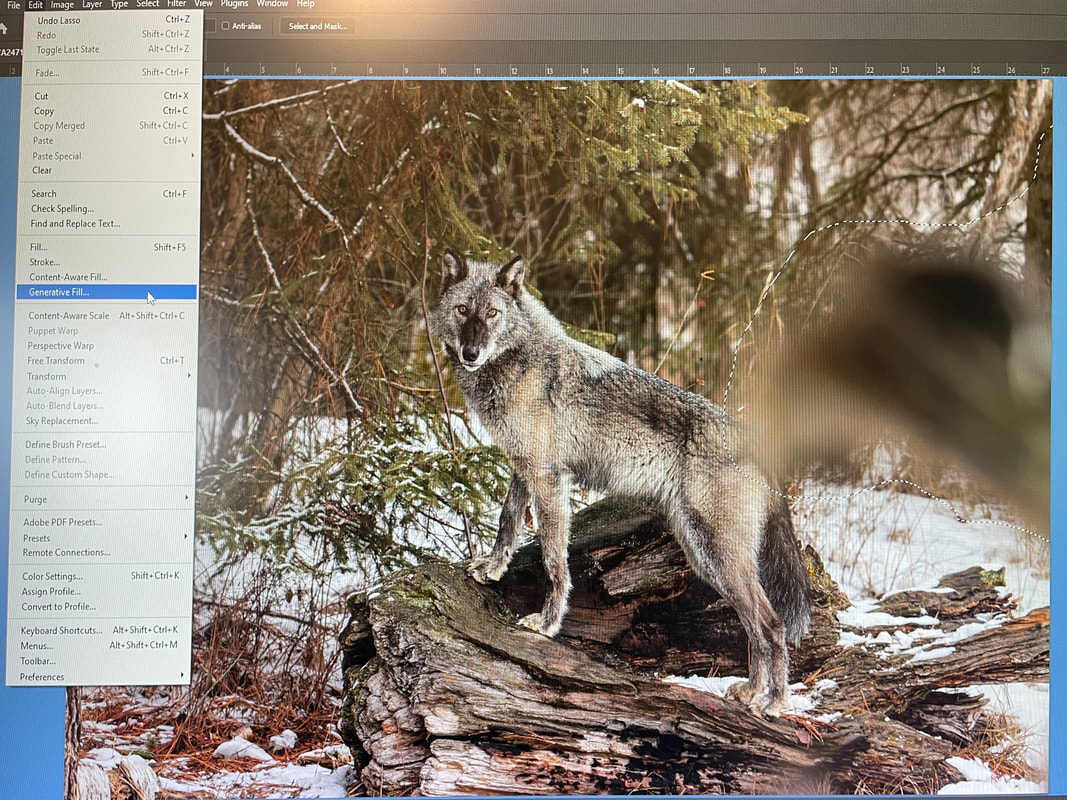
Select the area that you want to replace as in the image above. Then in Edit select Generative Fill. Do not click on Generate yet.
Picture
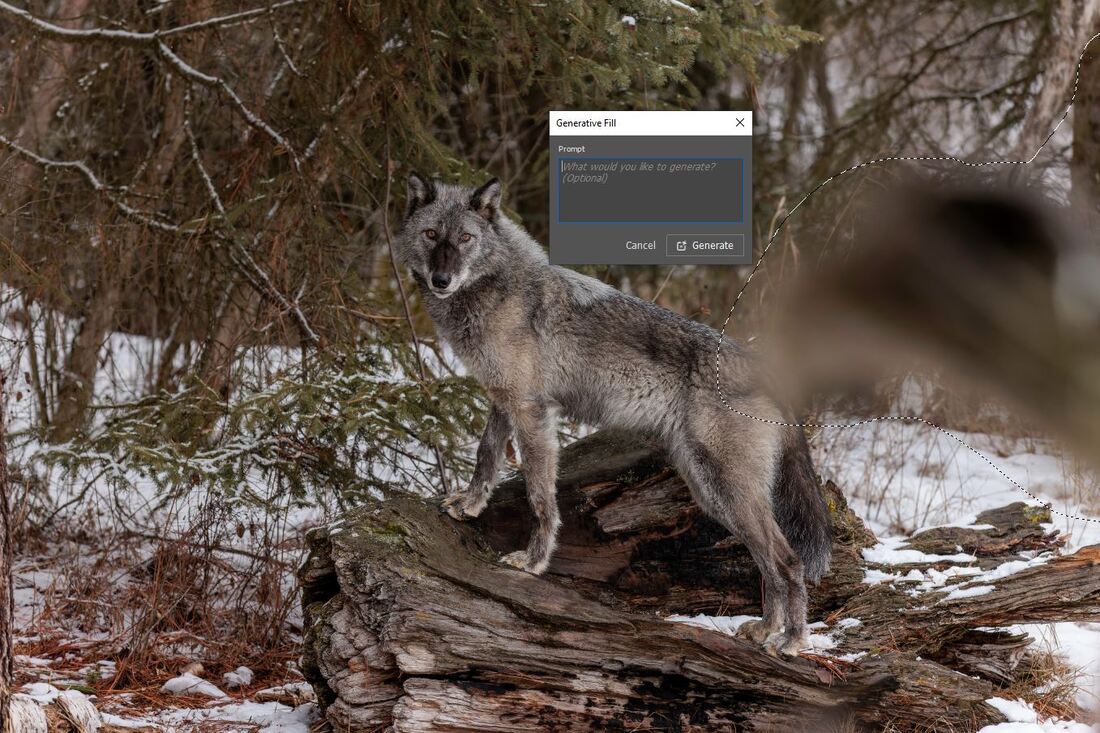
Instead of typing anything in the prompt box LEAVE IT BLANK. What Photoshop will do next is gather the information from all the surrounding pixels and give you 3 different options to fill the selection with.

Click on Generate and you will receive a new layer with those options to pick from.
Picture
 Then Click on each of the three variations to see which one you like. If you like none of them simply click on Generate box above the variations and Photoshop will give you 3 new variations.
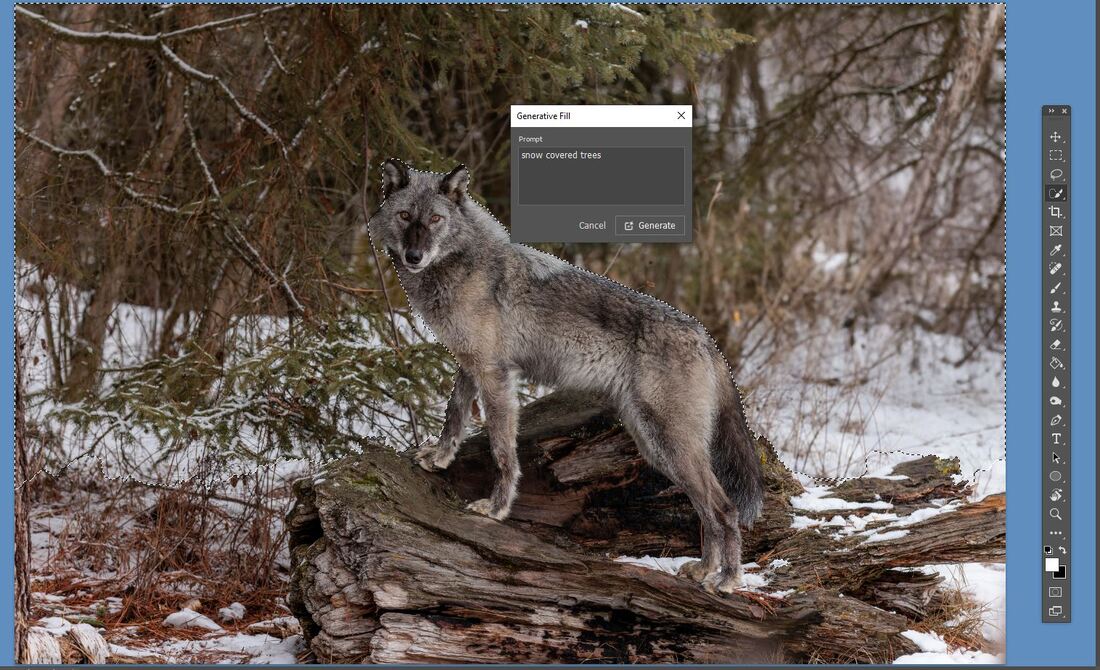
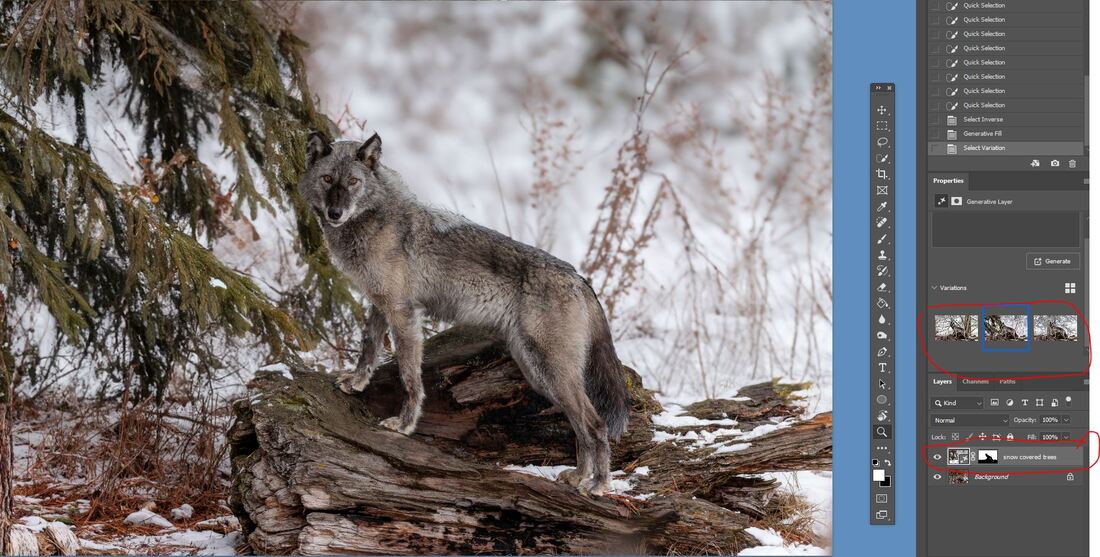
If you really want to go further and remove the entire background continue reading the steps below.  After I flatten the layer I am going to now select all of the background and enter snow covered trees in the prompt.  Then click on Generate.
Picture
As the image below is just an example of what can be done I made a very sloppy selection.  Spending some more time on the selection and then using the mask in the layer can improve on the process immensely.  But I wanted to show you what can be done beyond removing unwanted objects in an image using the existing pixels in the original image.
Picture
0 Comments

ADAMSKI EFFECT – PART II

6/22/2023

0 Comments

 
Picture
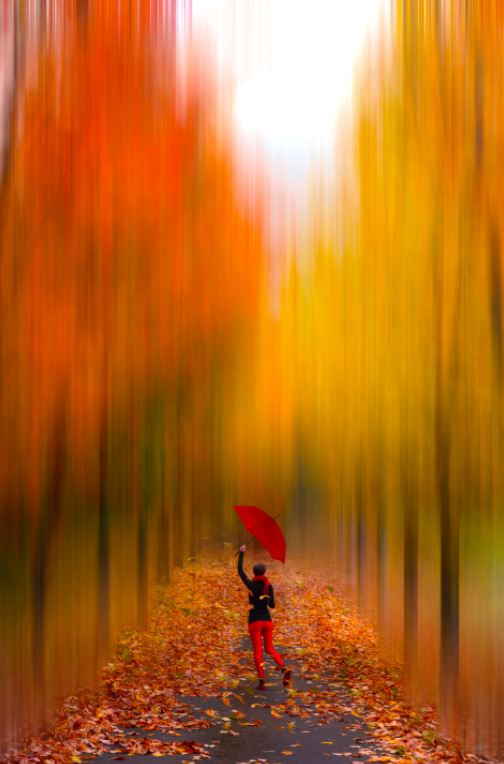
This is a slightly more difficult version of applying the Adamski Effect to an image as it includes a person. Most of the steps are similar to in Part I but there are some variations and additional steps.

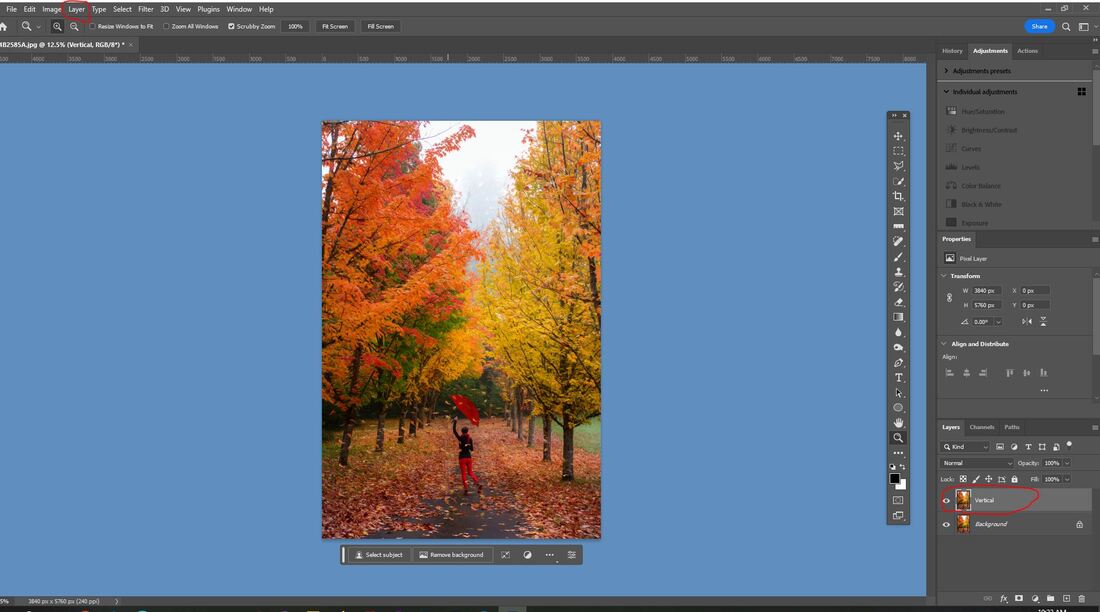
First step is to create a duplicated layer from the background layer. To do this right click on the background layer and select Duplicate Layer or with the PC keyboard shortcut do a Control J. As I am only doing a vertical blur with image there is only one duplicated layer which will be renamed 'vertical'.
Picture
With the Vertical layer selected go to the Filter Tab, from the drop down box select Blur then Motion Blur. Type -90 in the Angle field to make the blur vertical. I will use 840 in the Distance slider for this image. This is purely your choice. The higher the number the more blur. Then click OK.
Picture
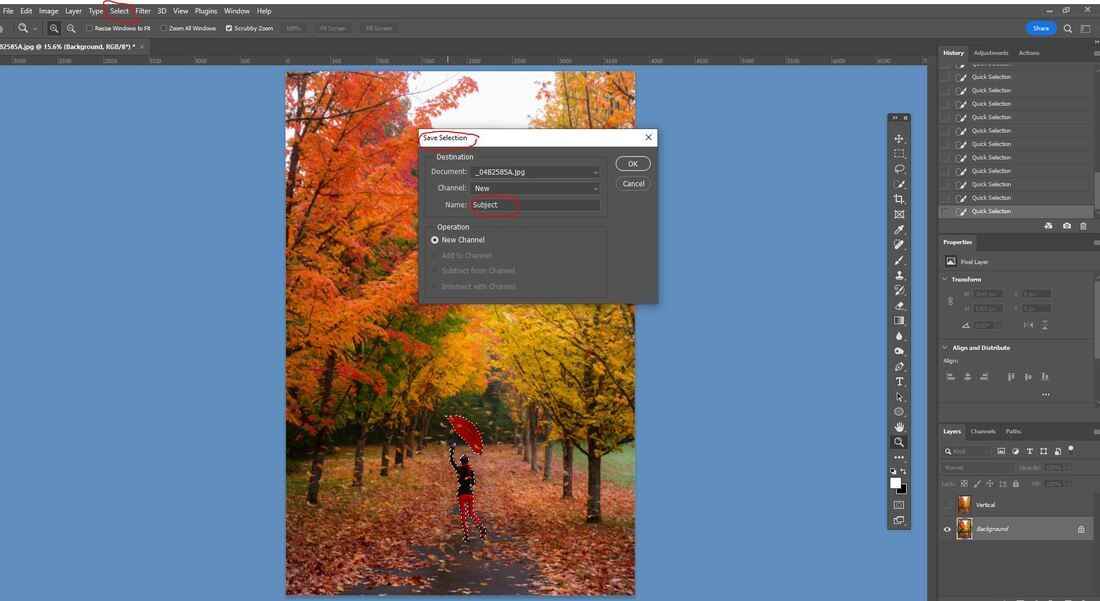
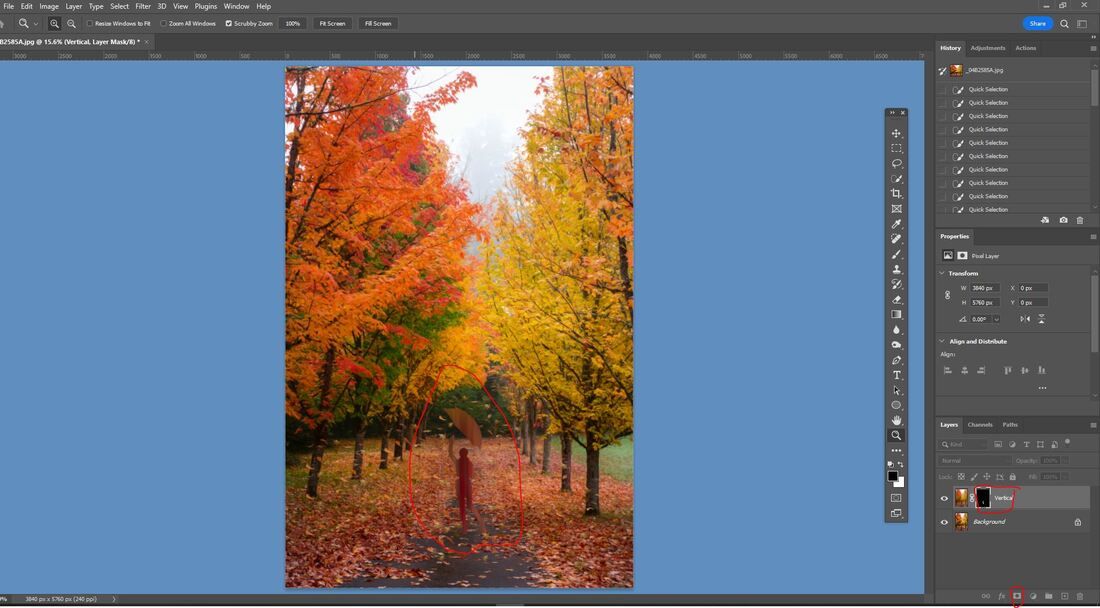
Click on the icon next to the Vertical layer to make it not visible. Then select the Background layer and click on Select then Subject. This will select the person in this image and does a pretty good job. It would be useful to zoom in and do any touch up needed. Then click on Select and Save Selection, naming it Subject and click on OK.
Picture
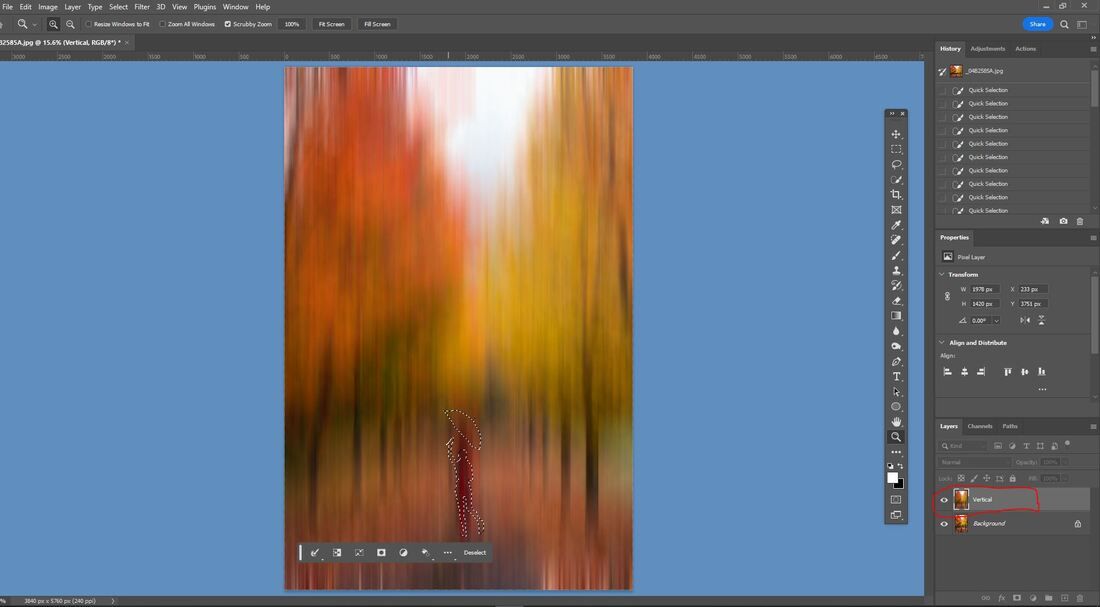
Click on the Vertical layer which will make it visible again and you will see the subject is still selected. Add a Layer Mask by clicking the icon in the bottom of the Layers Palette.
Picture
The mask is black which is hiding the subject.
Picture
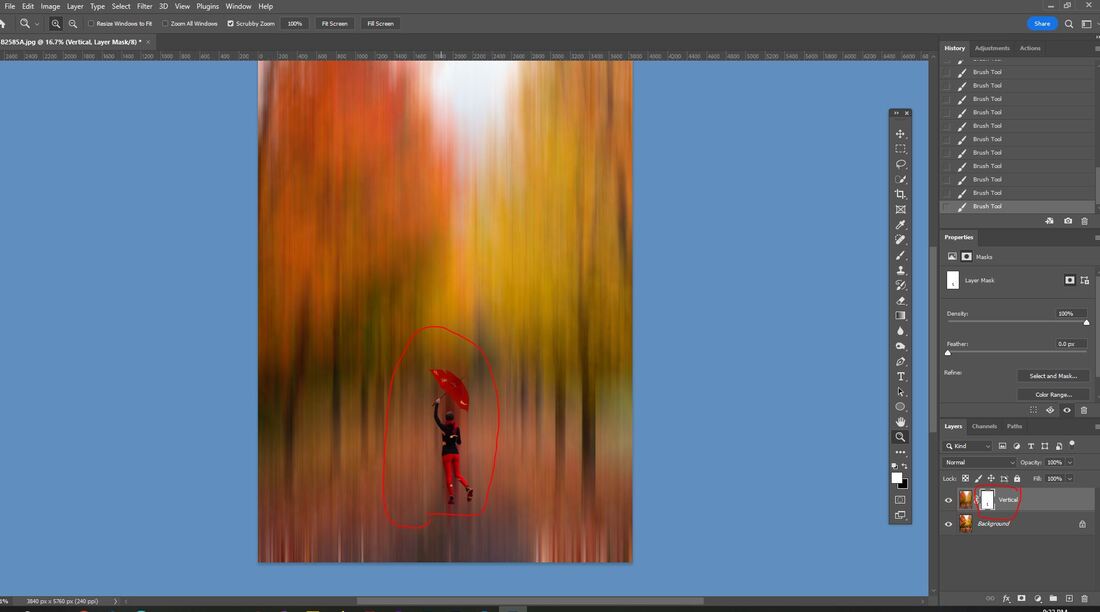
To change the blur from the Subject to the Background click on the black Layer Mask and do the PC keyboard shortcut Control I to invert the mask. Zoom in close to again do any touch up.
Picture
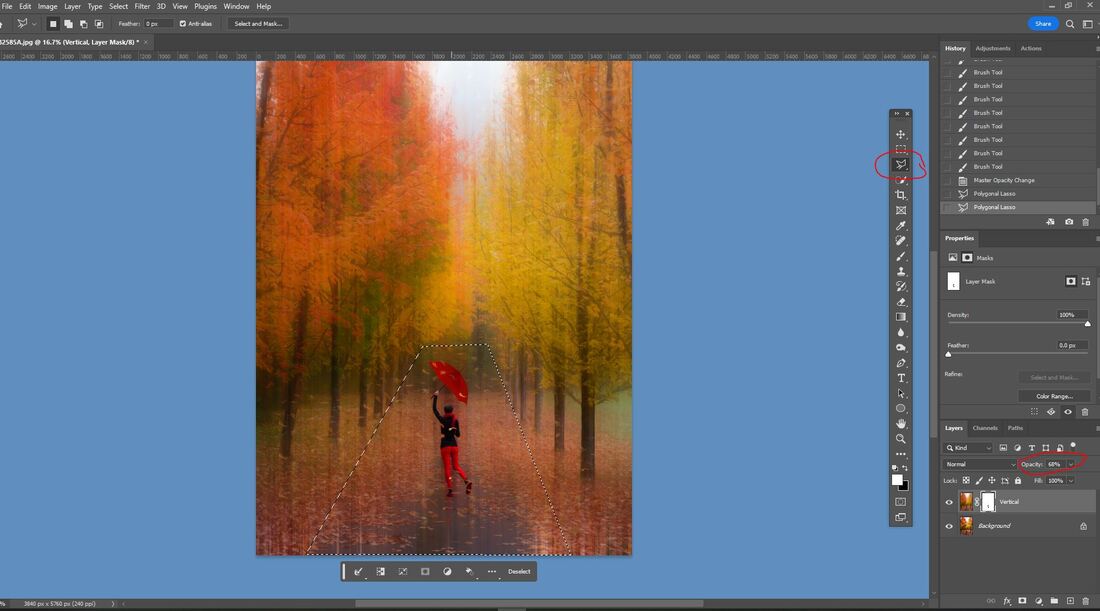
Lower the opacity on the Vertical Layer so you can see the background. Then using the Polygonal Tool select the area that you want to reveal.
Picture
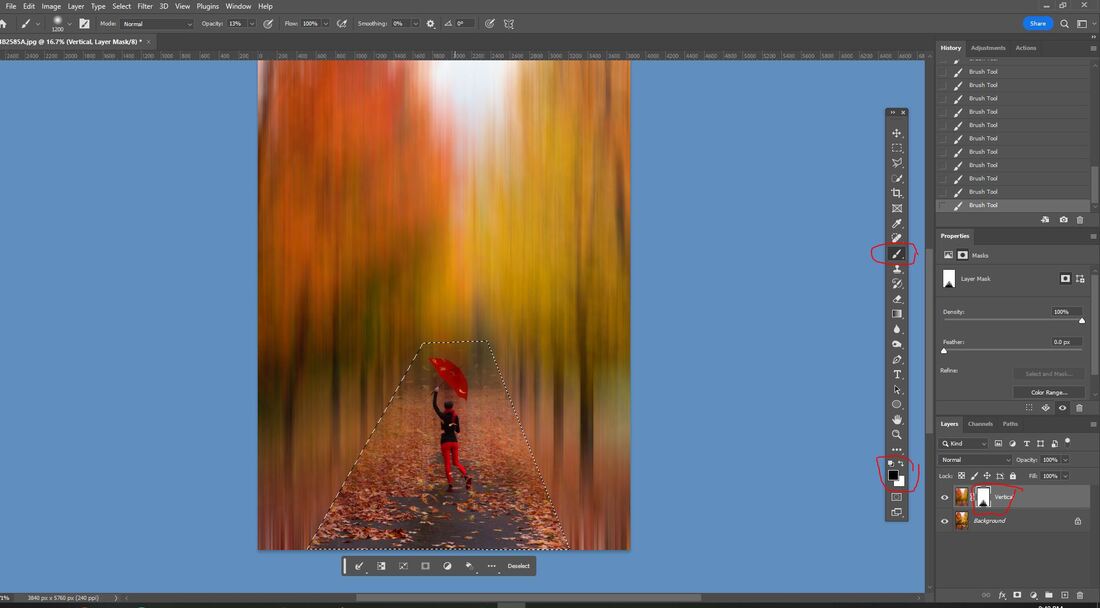
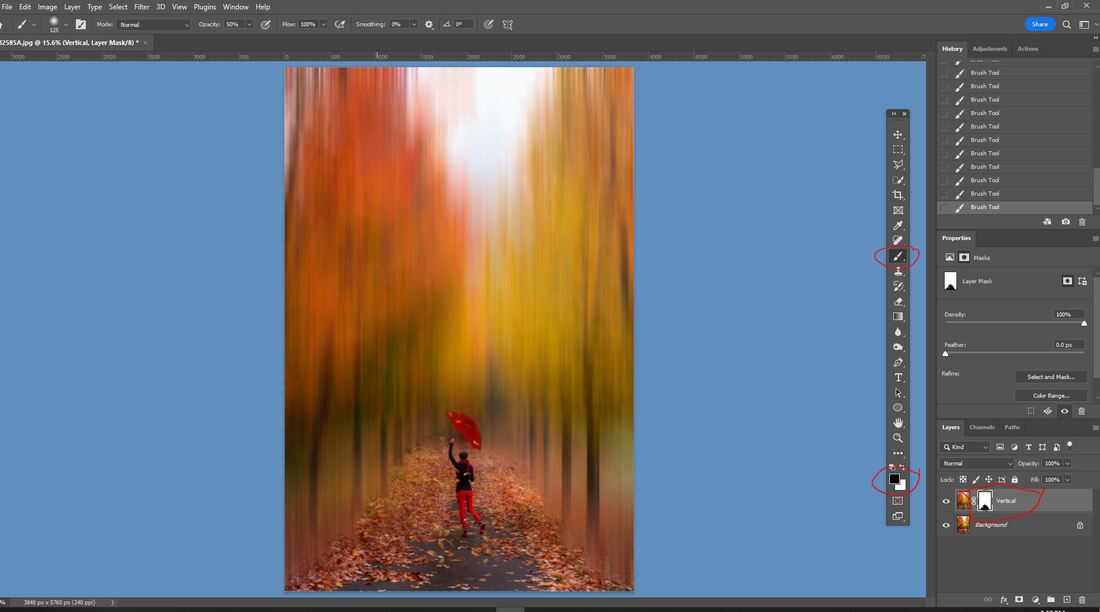
Using a large soft black brush set the Opacity to 10-15%. Start brushing on the Mask at the bottom and brush towards the top until you have the look you want. The effect will be contained within the selected area framed by the 'marching ants'.  The bottom should be black and fading to gray towards the top of the selection.
Picture
Deselect the Polygonal selection and lower the opacity of the layer. Using a smaller soft black brush brush along the edges of the blurred area and the leaves. Toggle between the black brush to reveal and the white brush to bring the blur back if you've removed too much. Also toggle between a lower opacity and 100% opacity to see the progress. This is probably the most time consuming part of the edit.
Picture
From here I flattened the layers and then duplicated the background layer to remove the leaves from the umbrella. I found them way too distracting. Here is the finished project.

Picture
0 Comments

ADAMSKI EFFECT – PART I

6/22/2023

0 Comments

 
Picture
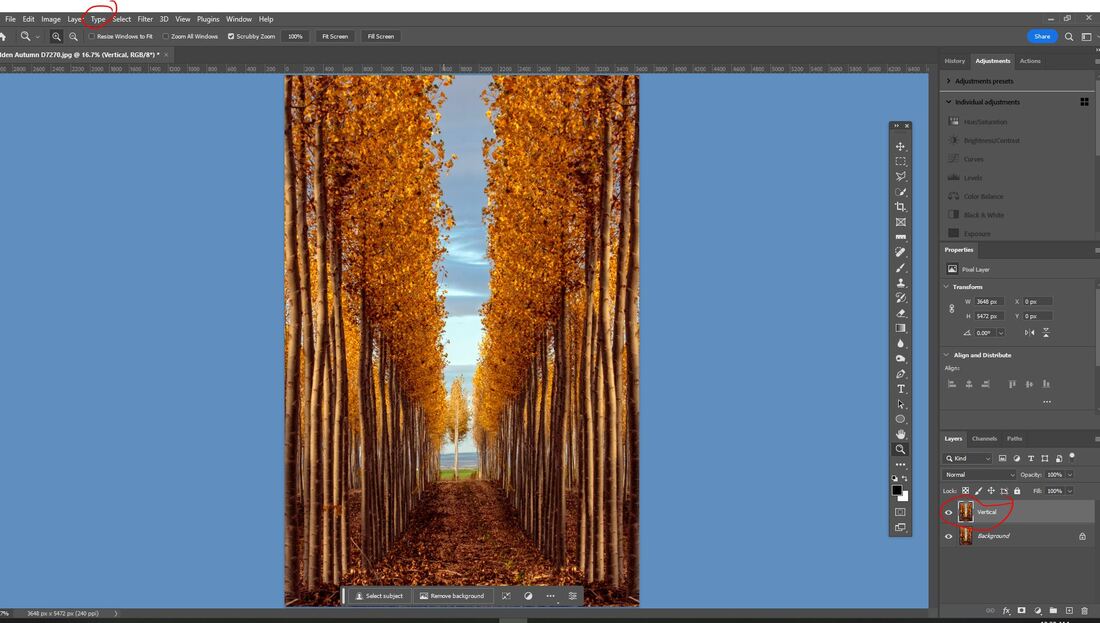
First step is to create a duplicated layer from the background layer. To do this right click on the background layer and select Duplicate Layer or with the PC keyboard shortcut do a Control J. As I am only doing a vertical blur there is only one duplicated layer which will be renamed 'vertical'.

Picture
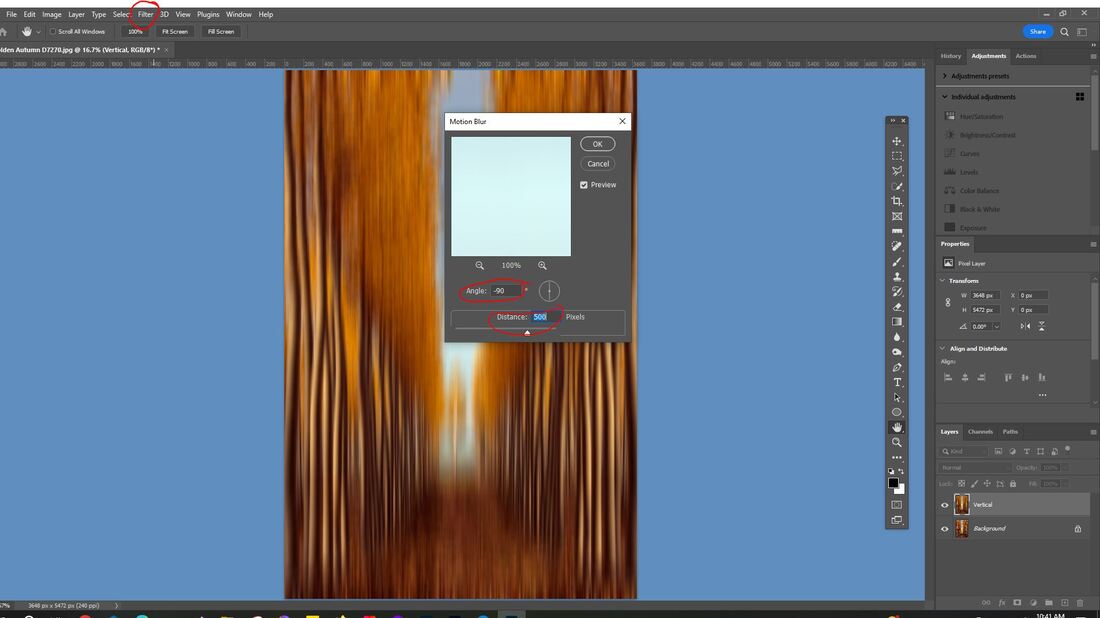
With the Vertical layer selected go to the Filter Tab, from the drop down box select Blur then Motion Blur. Type -90 in the Angle field to make the blur vertical. I will use 500 in the Distance slider for this image. This is purely your choice. The higher the number the more blur. Then click OK.

Picture
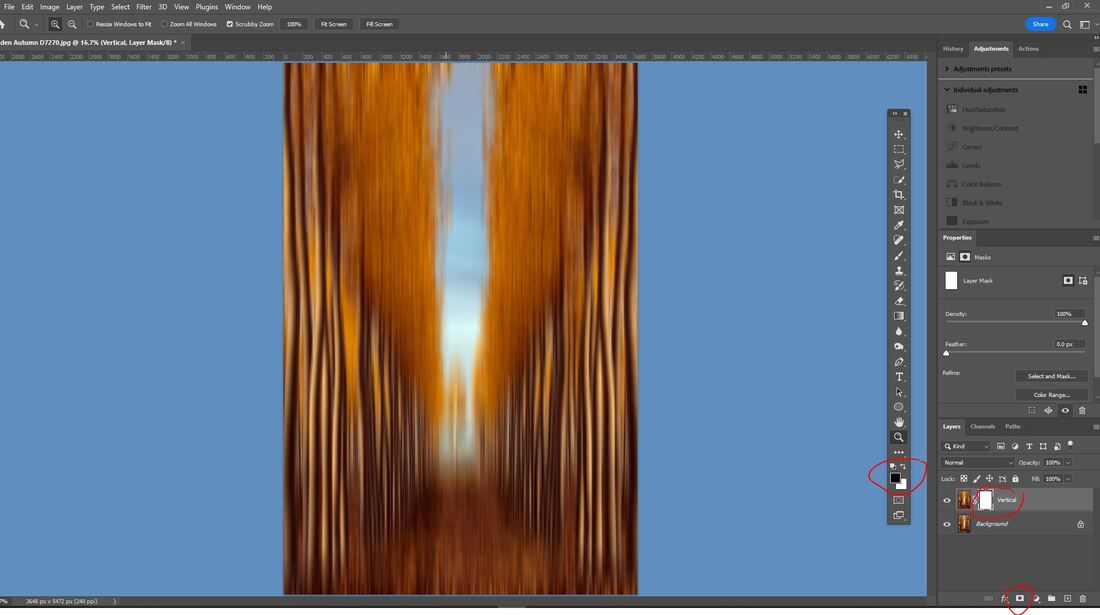
Add a Layer Mask by clicking the icon in the bottom of the Layers Palette. The mask should be white and the foreground color palette should be black.

Picture
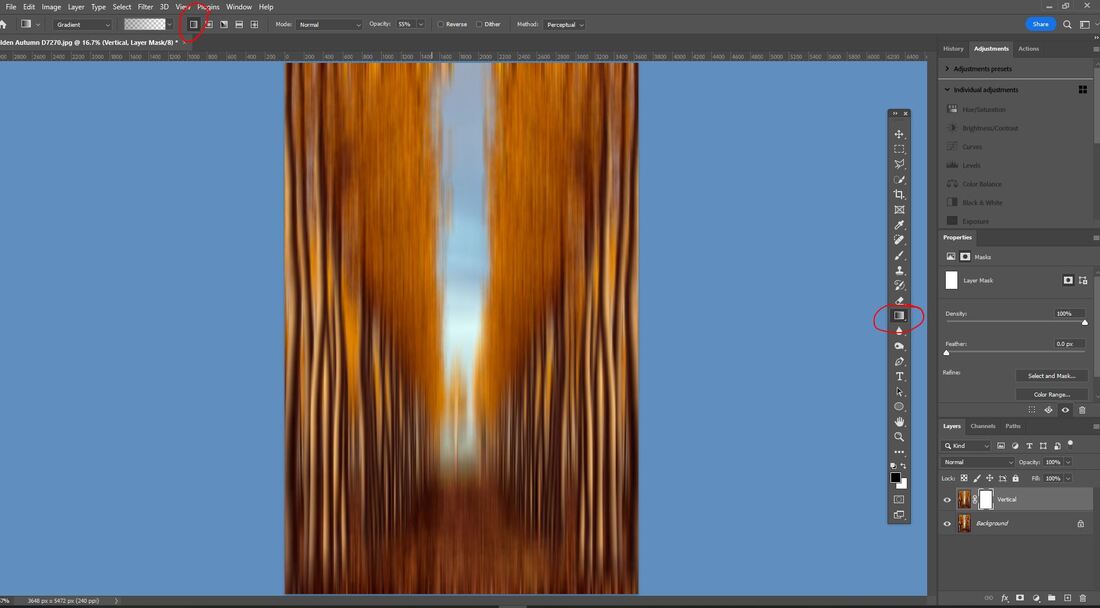
Select the Gradient Tool in the tools bar or with the PC keyboard press the letter 'G'. Make sure the 1st Icon next to the Gradient bar is selected. It is called the Linear Gradient.

Picture
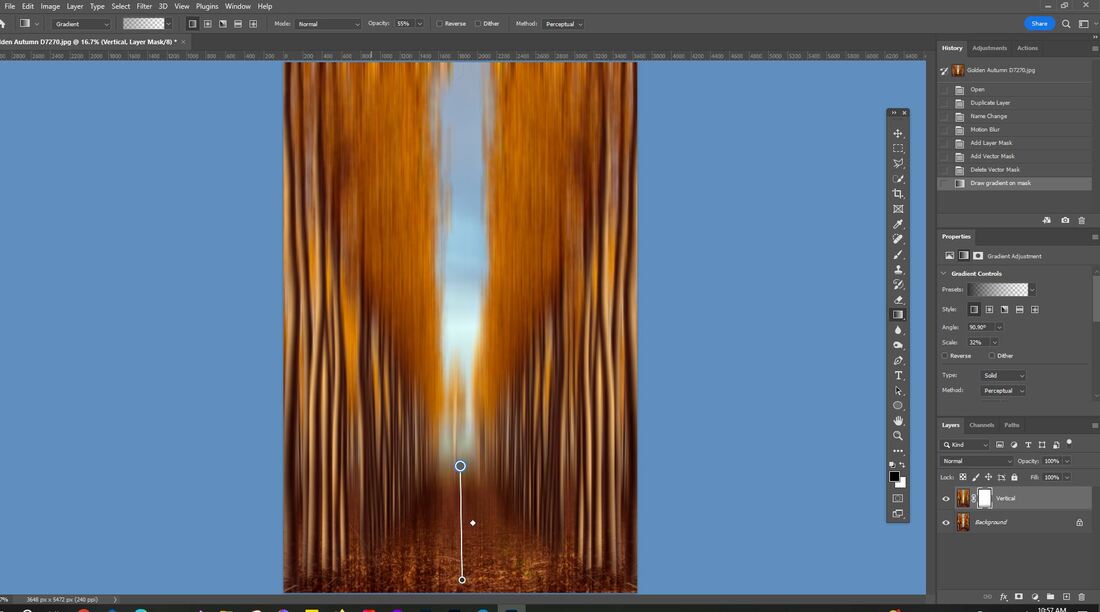
Making sure the Mask is selected on the Vertical layer hold the Shift key and click near the middle bottom of the image and drag up a slowly to maybe an inch or so. You will see the lower portion of the image being revealed.

Picture
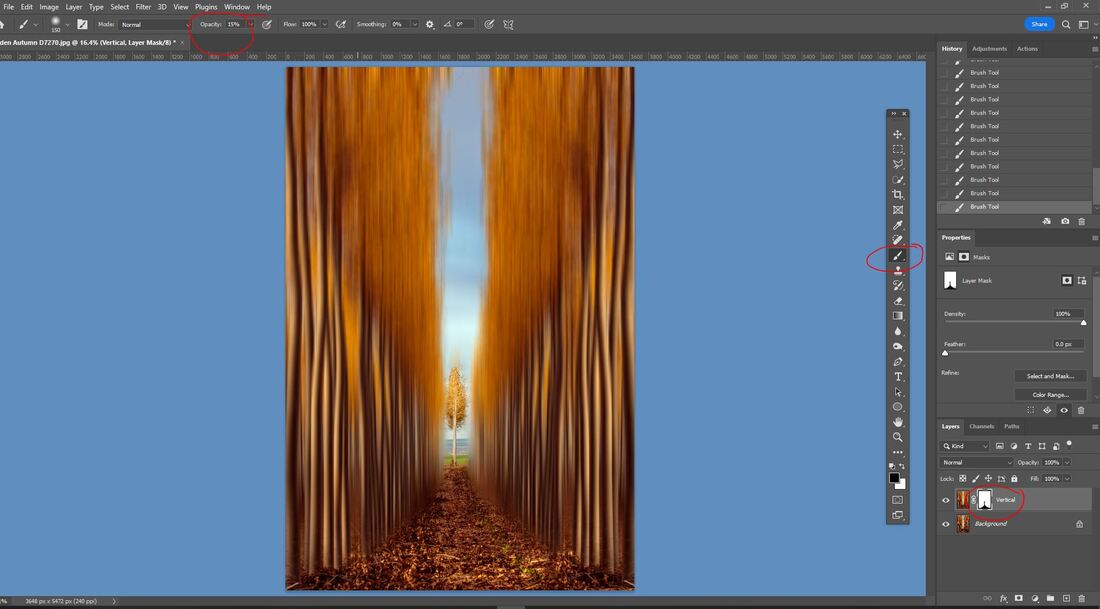
Using a large soft black brush set the Opacity to 10-15%. Start brushing on the Mask at the bottom and brush towards the top until you have the look you want. The bottom should be black and fading to gray towards the top of the selection. Continue brushing along the edges of the blurred area and the trees. Toggle between the black brush to reveal and the white brush to bring the blur back if you've removed too much. Also toggle between a lower opacity and 100% opacity to see the progress. This is probably the most time consuming part of the edit.

Picture
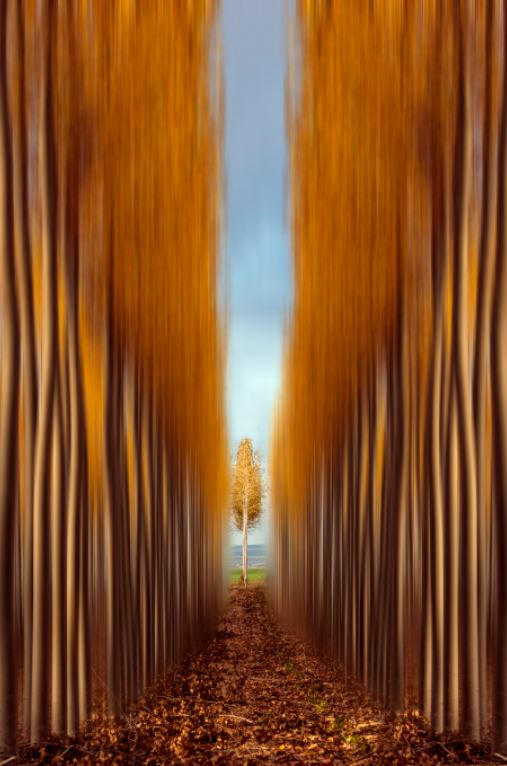
Flatten the layers and do a Save As naming the file. Here is the finished project.

Picture
0 Comments

CANON BATTERY LIFE

5/31/2023

0 Comments

 
Picture
Key information regarding how to understand the Battery Information found on the Wrench tab in your Menu screen on your Canon camera. And how to understand what it is showing you.

Not every Canon body will have the same data but will be similar.

• Remaining capacity
This is the remaining capacity of the battery that is currently in your camera. This will show the percentage of charge remaining in the battery.
• Shutter count
This shows how many times the shutter was triggered for still images on this battery. Every time the battery is recharged the number is reset.
When the number on the shutter count starts dropping it is a sign the battery condition is starting to deteriorate.
• Recharge performance
This shows the battery’s condition.
Batteries will not last forever. It is estimated that a battery will last between 500 and 1000 recharge/discharge cycles.
There are many things that influences the life of your battery. One of the key factors that can affect battery life is recharging it before it is almost drained. Shooting a few images and then charging the battery will shorten its life far quicker than using the battery until it is almost drained and then recharging it.
Performance guide
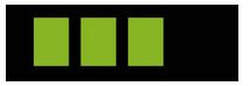
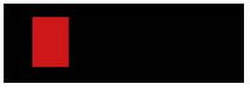
Here's what the colored bars mean on the Recharge performance menu item.

Picture
Three Green Bars: The battery will give full performance each time it’s charged.


Picture
One Green Bar: The battery is still useful but nearing it end. A full recharge will not deliver the same performance as a new battery.


Picture
One Red Bar: The battery has reached it's end. Time for a replacement.


0 Comments
<<Previous

    Our Flickr Photos

    Author

    Name:
    Wes & Dotty Weber

    Occupation:
    Photographers at Heart

    Favorite Camera:
    Canon  R5

    Favorite Subjects:
    Absolutely everything.

    Favorite Vacation Spot:
    Everywhere we’ve been has it’s own special beauty and some places like Yellowstone National Park and the Desert Southwest can be unlike anywhere else.  But to name a favorite is hard as we’ve not seen everything, yet.  

    Personal Motto:
    "Everywhere you look is a great image if you look closely”


    Archives

    March 2026
    September 2025
    July 2024
    February 2024
    June 2023
    May 2023
    April 2023
    April 2022
    November 2018
    January 2018
    November 2016
    December 2015
    July 2015
    January 2015
    February 2014
    November 2013
    July 2013
    June 2013
    May 2013
    February 2013
    January 2013
    November 2012
    September 2012
    August 2012
    March 2012
    February 2012
    December 2011
    October 2011

    RSS Feed

    Categories

    All
    Canvas
    Commerce
    Domain
    Email
    Fine Art America
    Framed
    Gallery Wraps
    Greeting Cards
    New
    Outage
    Prints
    Registrar
    Shopping
    Website
    Weekly
    Wesdotphotography

Copyright © Since 2000, WesDotPhotography All Rights Reserved.